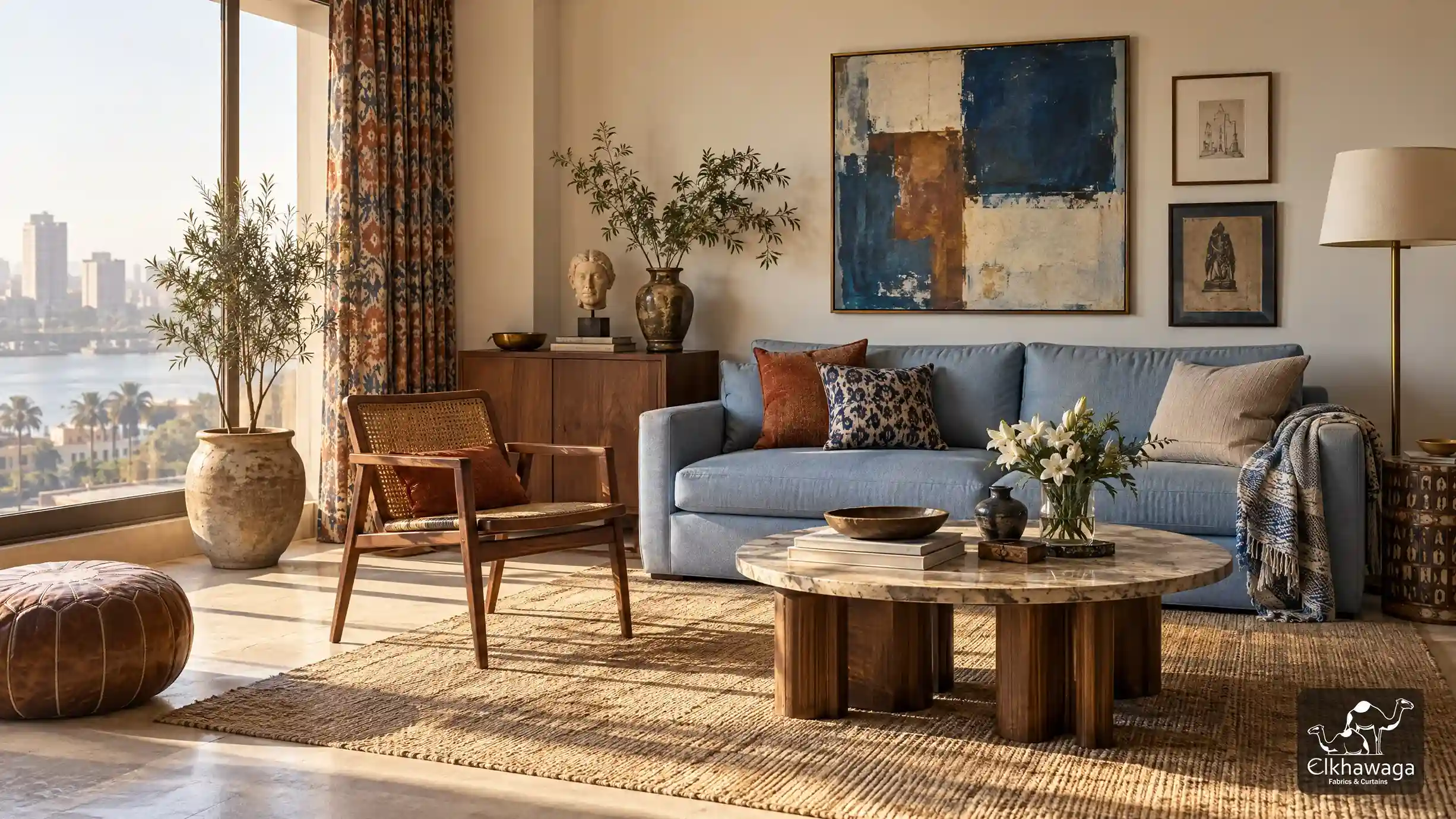
Eclectic interior design is a considered mix of pieces from different styles, periods or places. The room feels cohesive when a few details repeat—such as a shared color, material, shape or pattern—so the contrast looks intentional rather than random. Eclectic style does not require a large room, a particular budget or a maximalist amount of decor.
What is eclectic interior design?
An eclectic room may pair a contemporary sofa with a vintage side table, combine a patterned rug with simple curtains, or bring together artwork and textiles collected at different times. The pieces do not need to match. They do need to relate to one another in a way that makes sense for the people who live there.
That connection might be a color repeated in a cushion and a curtain motif, a similar wood tone across furniture, or a balance of smooth and tactile materials. The result is personal, but still edited. A useful test is to ask why each item is in the room and what links it to the rest of the scheme.
Eclectic vs. bohemian vs. maximalist
These styles can overlap, but they are not exact synonyms.
•Eclectic describes a curated combination of elements from different styles or periods, held together by a visual thread.
•Bohemian often feels more relaxed and informal, with layered textiles, natural materials and collected objects. A bohemian piece can sit comfortably in an eclectic room.
•Maximalist describes a more abundant approach to color, pattern, objects or display. Eclectic design can be restrained; it does not have to fill every surface.
•Modern refers to a particular visual language. A modern piece can be one element in a broader eclectic mix.
The boundaries are flexible. What matters is whether the combination feels chosen and balanced, rather than assembled without a plan.
Why eclectic rooms feel relevant now
Design coverage for 2026 has highlighted more personal, layered interiors, saturated colors and richly patterned or tactile textiles. Those ideas overlap with eclectic design, but trend coverage is not proof that every household wants a bold interior or that the keyword has high search demand in Egypt.
A Cairo example appeared in CairoScene’s feature on designer Emma James’ home, which described a personal mix of collected objects, local materials and varied textiles. It is a useful local illustration of how a home can reflect its owner; it is not a formula that every room should copy.
How to create a cohesive eclectic room
1. Choose one anchor piece
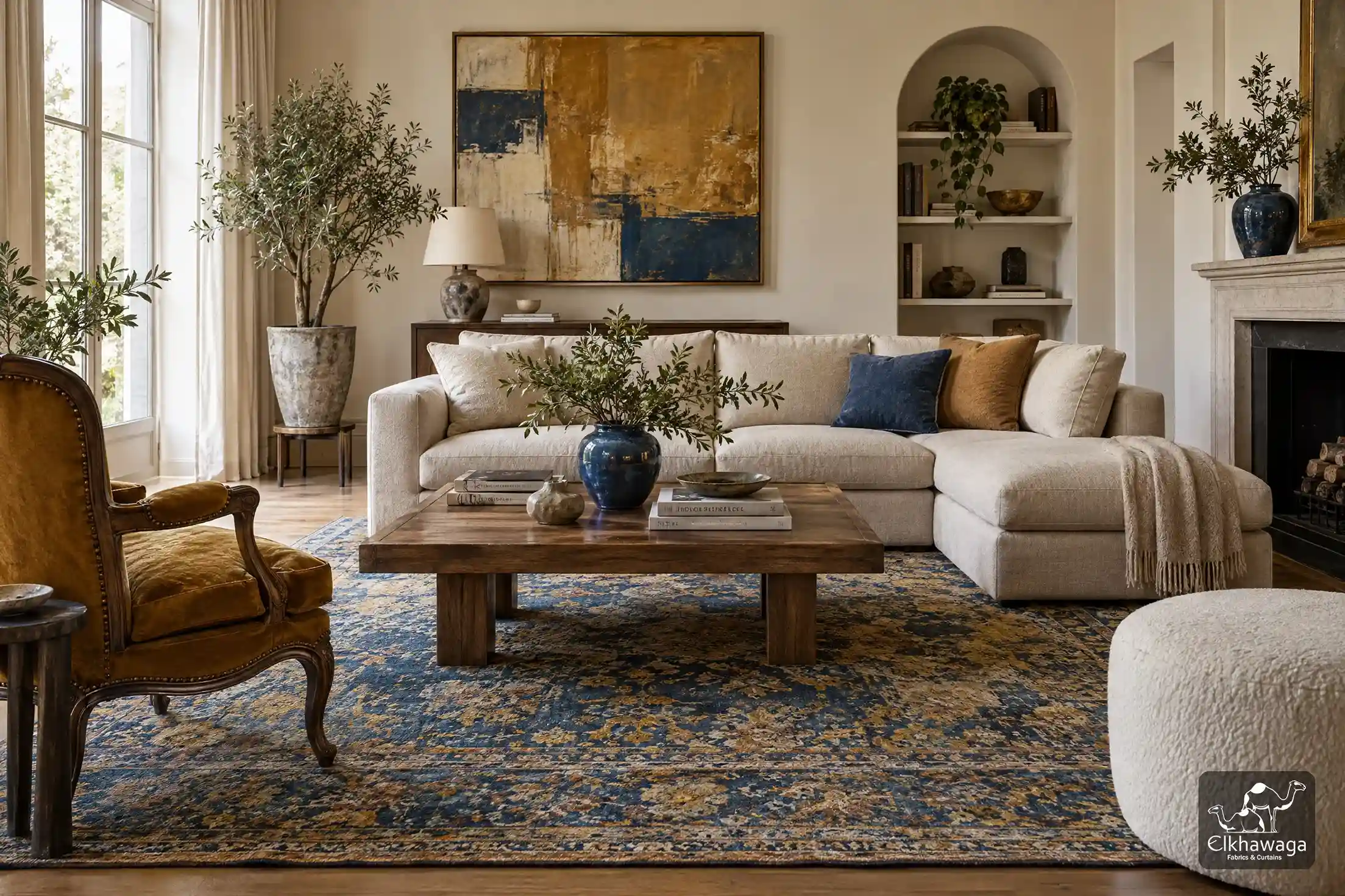
Start with the item you want people to notice first. It could be a rug, artwork, sofa, distinctive chair or patterned curtain. If every item is trying to be the focal point, the room has no visual hierarchy. Decide what leads, then let the other pieces support it.
2. Build a small color palette
Choose a base color and a few supporting shades from pieces you already own. You do not need to use identical tones everywhere. Repeating one color in a cushion, a print and a small detail on the curtains can make a varied room feel connected.
If you already have a patterned sofa or rug, borrow one or two colors from it for smaller accents. For more help, see El Khawaga’s guides to fabric color combinations and choosing a curtain color.
3. Mix patterns by scale and rhythm
A practical starting point is to combine patterns that do not compete at the same scale. For example, pair one large botanical or geometric design with a smaller stripe or motif, then add a plain fabric or a quiet texture. Repeating one color across the patterns helps them feel related.
This is a flexible styling method, not a strict rule. If two patterns have similar scale and visual weight, they may compete. If the room already has a strong rug or upholstery print, use a quieter curtain or repeat only a small detail from the main pattern.
4. Use texture for variety without adding more colors
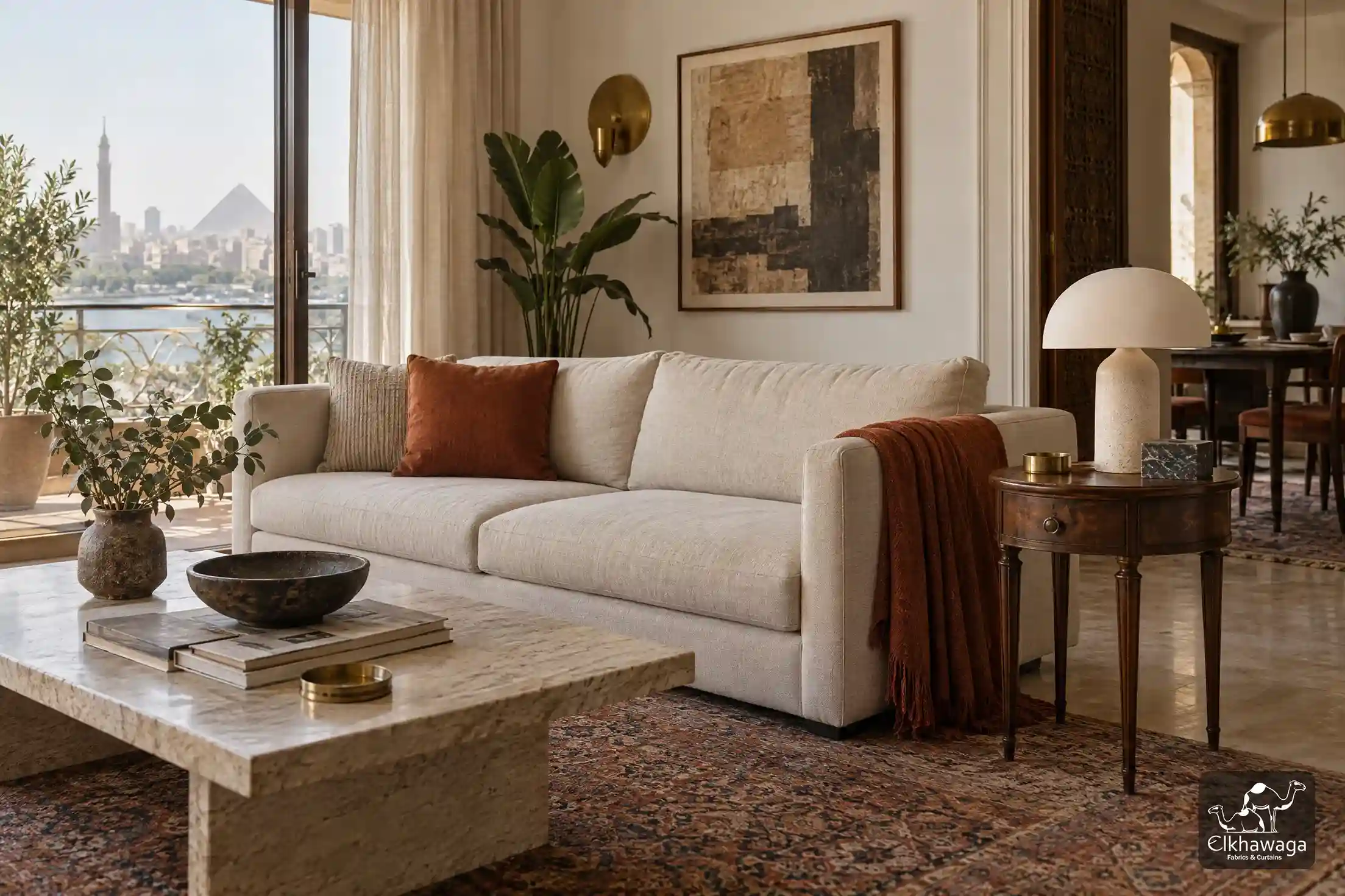
Texture creates contrast even within a limited palette. Linen, velvet, woven fabrics, wood and metal each reflect light and feel different. A tactile curtain can add depth to a room with plain upholstery, while a smooth solid fabric can calm a space that already has several prints.
Compare the options in El Khawaga’s curtain fabric guide and browse linen, velvet and printed linen when considering a real fabric choice. Product availability and performance should be checked on the individual product page.
5. Mix old and new through a shared detail
A vintage side table can work beside a contemporary sofa when another detail links them. That link might be a related wood finish, a repeated curve, a metal accent or a color used elsewhere in the room. Do not force old and new pieces to match exactly; aim for a conversation between them.
6. Make the curtains part of the composition
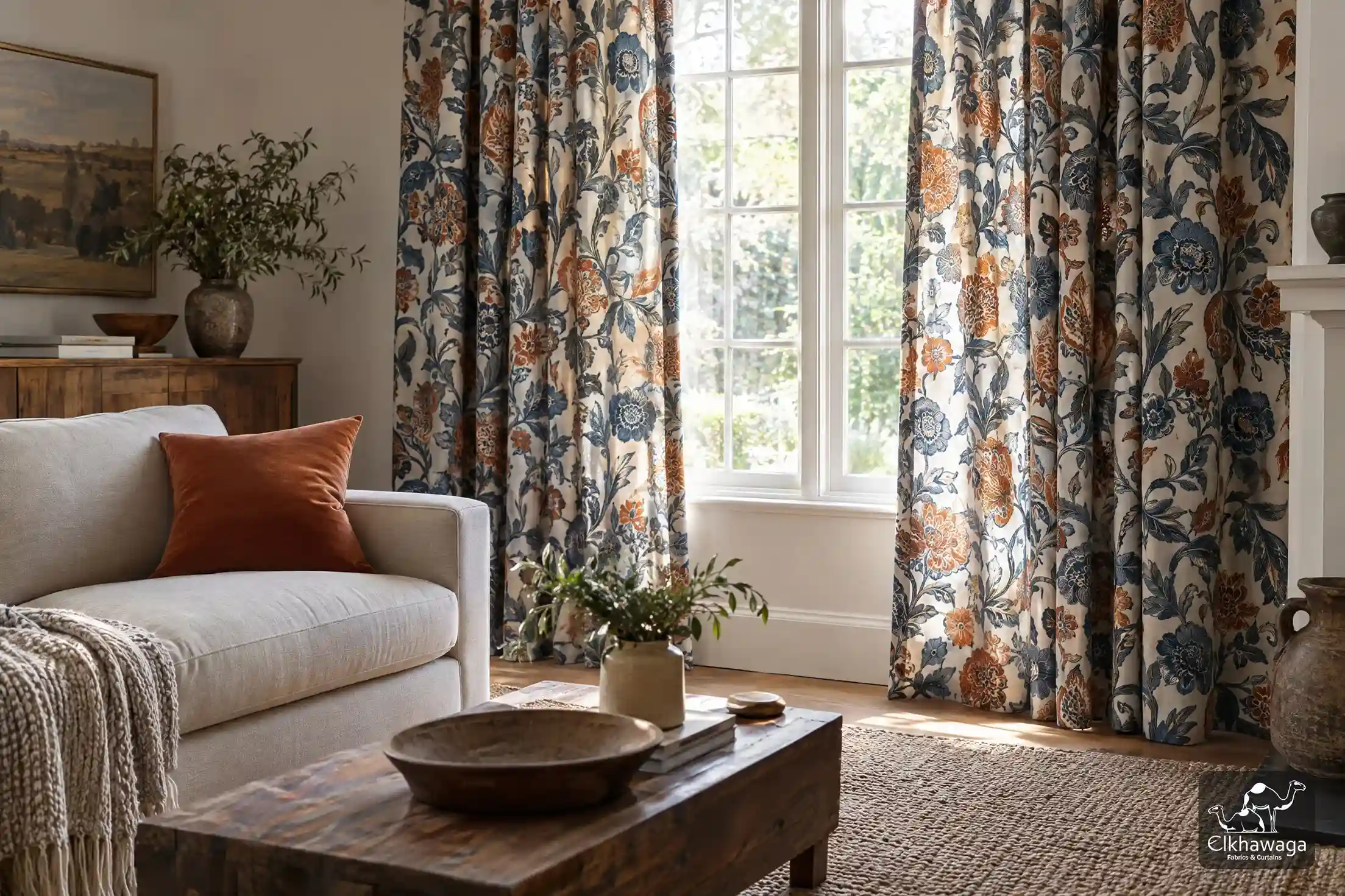
If the rug or sofa is the main patterned piece, a solid curtain or a subtle texture may be the better balance. If the rest of the room is quiet, a print can give the window a clear role in the design.
Look at the pattern from across the room, not only on a small sample. Consider the window’s light, privacy needs, lining and care instructions as well as appearance. For a made-to-measure project, see custom curtains in Egypt and confirm the fabric, dimensions, heading and installation details before ordering.
7. Leave visual breathing room
An eclectic room does not need a pattern on every surface. Keep some walls, upholstery or window treatments visually quiet. Negative space helps statement pieces stand out and makes the room easier to live in.
Eclectic style design ideas for different rooms
Living room or reception room
Choose a main feature—a rug, artwork or sofa—and repeat one of its colors in cushions or the curtains. When the sofa is patterned, test a solid curtain in a color already present in the print. When the sofa is plain, a patterned curtain or accent chair can introduce more personality.
Small apartment
Eclectic style can work in a compact home. Keep the palette simple, choose one or two distinctive pieces and avoid using every surface for display. A quieter curtain can help the window remain part of the room without competing with furniture or artwork.
Bedroom
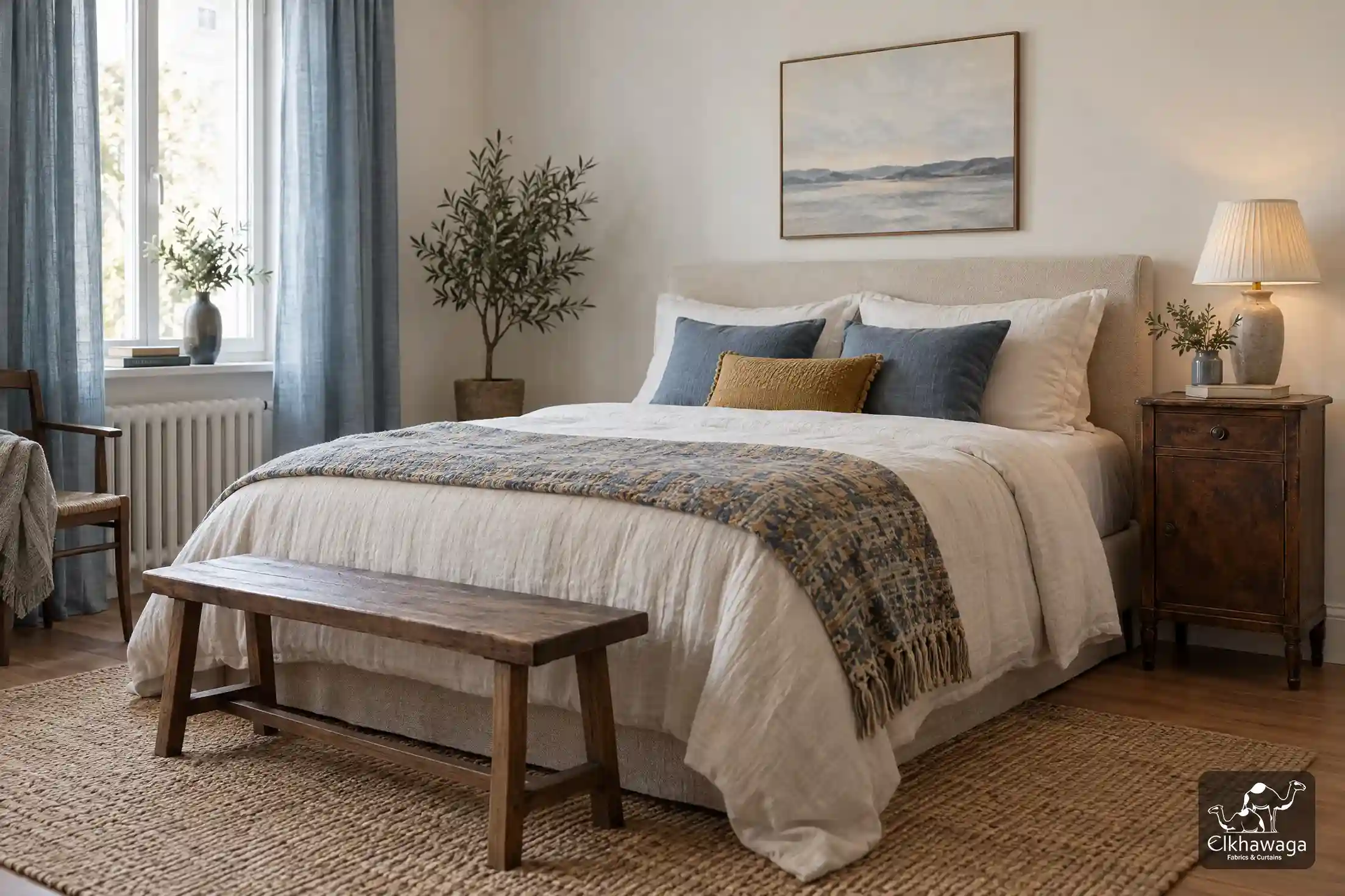
Begin with the room’s comfort and light-control needs. Repeat a color from the bedding in a print or accessory, then introduce one contrasting piece, such as an older bedside table or a patterned cushion. Check the fabric and lining specifications before relying on a curtain for privacy or darkness.
Common eclectic decorating mistakes—and how to fix them
•Too many focal points: Choose one leading piece and reduce the visual weight around it.
•Colors with no connection: Repeat a color or material in more than one place.
•Patterns at the same scale: Vary the pattern size and add a solid or quiet texture.
•Buying before testing: Compare fabric samples with the wall, sofa and rug in the room’s actual light.
•Copying a room photo exactly: Use inspiration images as a reference, then adapt the choices to your measurements, daily routine and budget.
Frequently asked questions about eclectic interior design
What does eclectic style mean in interior design?
It is a deliberately curated mix of pieces from different styles, periods or sources. Repeated colors, shapes or materials help the mix feel cohesive.
How do you mix patterns without clashing?
Start with one main pattern, add a second pattern with a different scale or rhythm, and repeat at least one color between them. Use solid fabrics or quieter textures to give the eye a break.
How many patterns should a room have?
There is no universal number. Start with one dominant pattern and one smaller supporting pattern, then assess the room. Add another only if it contributes something distinct and the palette still feels connected.
Is eclectic interior design the same as boho?
No. They can share layered textiles and collected pieces, but eclectic design is defined by a considered mix of styles or periods. Bohemian interiors often have a more relaxed, free-spirited character. The two can overlap.
Can eclectic style work in a small room?
Yes. Use a limited palette, one or two statement pieces and some calm surfaces. The style depends on thoughtful contrast, not room size or the number of objects.
Should eclectic curtains be patterned?
Not necessarily. Choose a solid curtain when the room already has strong upholstery or a patterned rug. Choose a print when the rest of the room is quieter and the curtain helps repeat a color or motif.
What is the easiest way to start an eclectic room?
Choose one item you already love, identify a couple of colors or materials in it, and add one contrasting piece that shares at least one of those details. Pause before buying more and check how the full room reads.
Start with one piece you love
Eclectic design is not about buying a complete set or following a rigid formula. Start with one meaningful or visually distinctive item, find the color or material that can connect it to the room, and build gradually. If you are considering new curtains or upholstery, browse El Khawaga’s fabric collections and compare samples with your room before making a decision.
-
🌐 Shop Online: Visit El Khawaga Official Website
-
📘 Facebook: Follow El Khawaga on Facebook
-
📸 Instagram: Follow @elkhawagafabrics on Instagram
-
📍 Branches & More Links: Discover All Our Locations here
-
📞 Customer Service Hotline: Call us directly at 19148